USEFUL AND LOW-CARBON ENERGY
FROM INDUSTRIAL WASTE HEAT
ANANKÉ EXPERTISE AT THE SERVICE OF YOUR PROJECTS
Make energy savings
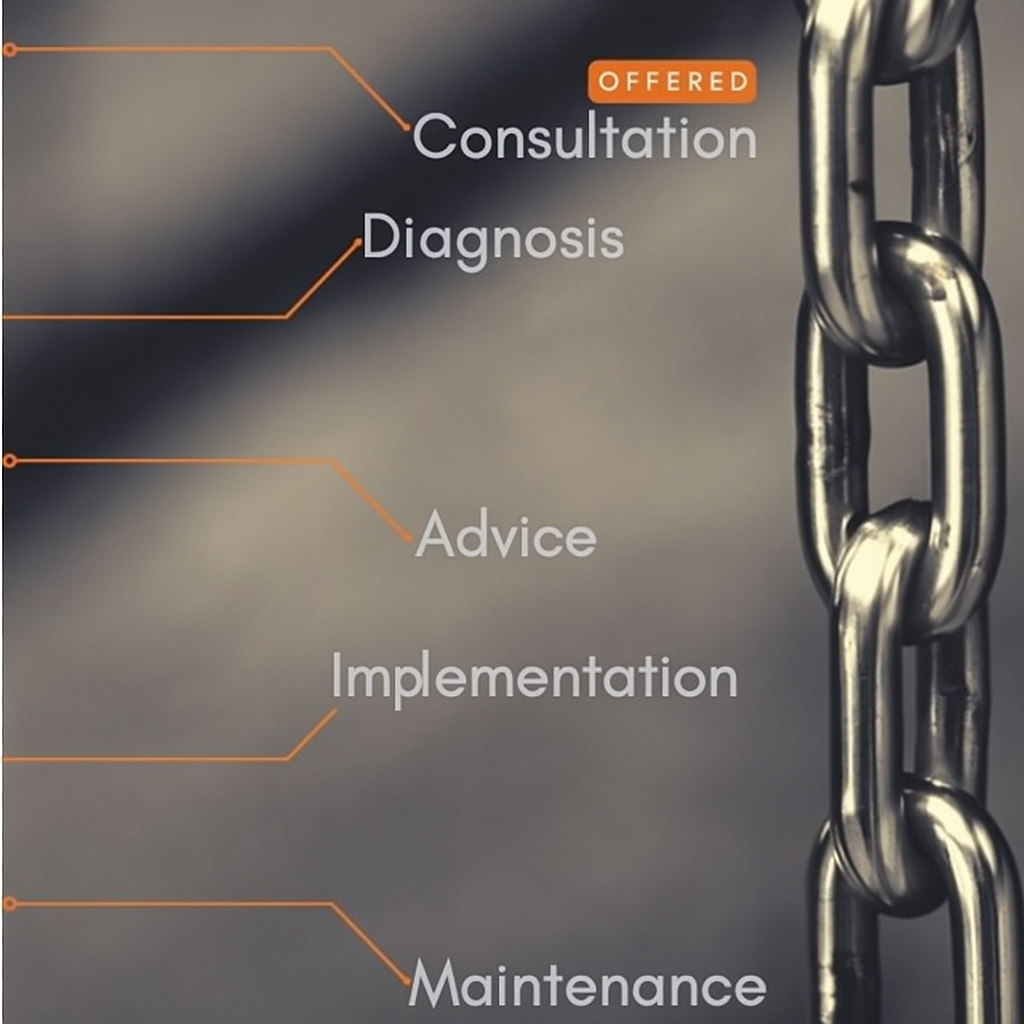
Transform your fatal heat! A complete offer: from diagnostics to turnkey installation and commissioning of the best technology available on the market, up to maintenance.
What is your potential for the valorization of waste heat ?
Our pre-study is offered with an initial estimate of the return on investment time.

Implementation of your installation
Prepare your installation calmly with our technical and economic study. By your side, from the implementation analysis to the search for funding.
Your turnkey project
We integrate your project with turnkey installation, until the commissioning of the waste heat recovery solution.
Long-term support
We maintain your equipment in operational condition thanks to our after-sales service and maintenance contract.
KEOS BY ANANKÉ
Our reason for being
Reducing energy consumption in all sectors – buildings, transport, industry, agriculture – is the key to achieving the goals set out in the Paris Climate Agreement. This involves both the development of energy-efficient technologies, but also the modification of the behaviour of all economic actors. The course is clear: our final energy consumption will have to be halved by 2050.
Concretely
- End the sale of internal combustion vehicles by 2040.
- Strengthening the energy efficiency of buildings: construction of new high-performance buildings, renovation of existing buildings, integration of renewable energies.
- Putting a fair price on carbon throughout the economy, including through the promotion, at European level, of a carbon price floor and pricing at European borders compatible with international trade rules.
- Extend and strengthen the system of energy savings certificates.
In the baseline scenario, primary consumption of fossil fuels, which was 1,394 TWh in 2017, declines by almost a third in 2028 to 942 TWh. The decay is greater for fossil fuels with a higher carbon content. Thus, in 2028, primary coal consumption is expected to decrease by 80% compared to 2012 to reach 28 TWh via the exit from coal as a means of energy production. The remaining consumption will mainly concern the steel sector, for which there are not yet operational methods for massively substituting coal. Petroleum products are expected to decrease by 34% compared to 2012 to 569 TWh and natural gas is expected to decrease by 22% compared to 2012 to 345 TWh PCI.
Concretely
- Putting a fair price on carbon across the economy
- Implement a new market mechanism: energy saving certificates (CEE).
- Reducing the energy needs of human activities.
- End the sale of internal combustion vehicles by 2040.
France is one of the very first countries in the world to have included the goal of carbon neutrality in its legislation through article 1 of the energy and climate change law of November 8, 2019. Our country thus plans to achieve zero net greenhouse gas emissions by 2050. To achieve this, the Government has set the objective of dividing our emissions by at least six times in 2050 compared to the 1990 level. The sectors concerned include construction, transport and industry.
Concretely
- Implement the Energy Renovation Plan for Buildings
- Maintain incentives for the installation of renewable heating. A renewable heat source is one that is provided by heat pumps, biomass boilers, combined solar systems or a connection to a renewable heat network.
- Achieve in the most efficient way the European target for 2030 of 37.5% reduction in CO2 emissions from new cars sold compared to 2021.
Continue the increase in requests for the eco-energy loan (PEE) distributed by BPI France, which is dedicated to SMEs carrying out work eligible for energy saving certificates. Extend the PEE device until 2025.
Our energy mix must evolve towards a carbon-free energy and further promote renewable energies (solar, wind, hydraulic, geothermal, biomass). The diversification of the electricity mix is essential, as it aims to make the French electricity system more resilient in the face of possible hazards. Three levers are essential for the diversification of the energy mix: developing renewable energies, reducing the share of nuclear power and decreasing the use of fossil fuels.
Concretely
- Increase renewable heat production by 40 to 60% from 2028.
- Increase state support for the biogas sector to €9.7 billion so that it represents 6 to 8% of gas consumption in 2028.
- Close 14 nuclear reactors, including 4 to 6 by 2028 (including the 2 of Fessenheim in 2020).
- Completely phase out coal heating in households and coal in district heating by 2025.